
The Knowledge Network Operating Model: A Paradigm Shift in Organisational Structure

SAKET BIVALKAR
Saket’s focus is on helping organisations to become flexible and adaptive, while emphasising that people in the organisation grow as well. His experience includes working with a range of organisations from large, complex global enterprises to small entrepreneurial start-ups.
The Knowledge Network Operating Model (KNOM) offers a compelling alternative to conventional organisational structures, enabling companies to thrive in dynamic environments. This article delves into the intricacies of KNOM, exploring its core elements, benefits, and practical implications for senior management in organisations with substantial revenue streams.
The traditional hierarchies of authority are being challenged by innovative frameworks that promote collaboration and knowledge sharing.
Understanding the Knowledge Network Operating Model
The Knowledge Network Operating Model is a fluid organisational framework designed to foster collaboration, knowledge exchange, and continuous improvement. Unlike rigid hierarchies that often stifle innovation, KNOM encourages a decentralised approach where individuals can operate autonomously while remaining interconnected through shared goals and objectives.
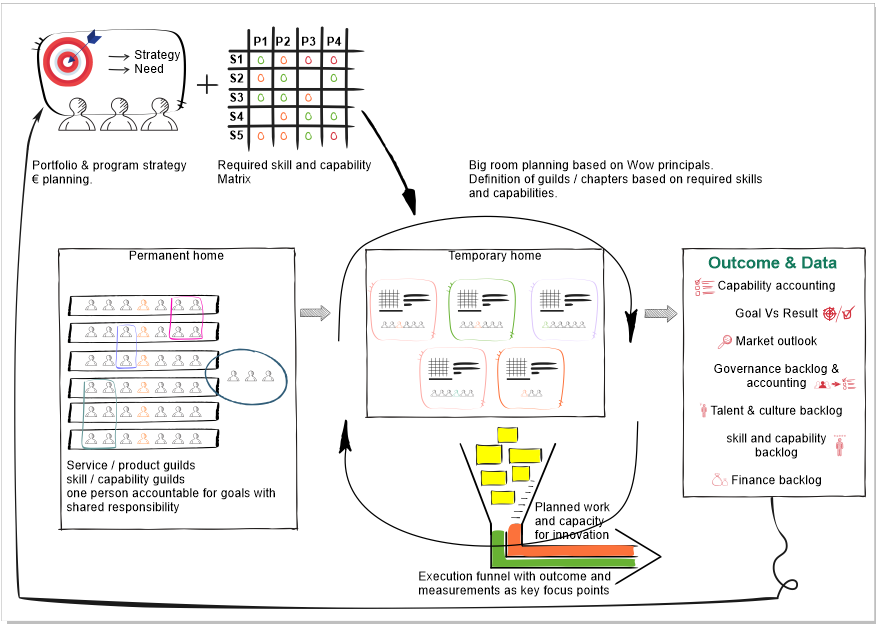
The Five Elements of Knowledge Network Operating Model (KNOM)
To fully grasp how the Knowledge Network Operating Model functions, it is essential to explore its five key elements:
- Permanent Home : The Permanent Home serves as the central hub where individuals gather to share knowledge, learn from one another, and develop their skills. Within this space, guilds form around specific competencies, allowing members to collaborate autonomously while contributing to the organisation’s overarching goals.
- Strategy Formation & Program Development : In this phase, representatives from each guild come together to formulate strategies and develop programmes that align with the organisation’s vision. This collaborative effort ensures that diverse perspectives are considered, leading to more robust strategic outcomes.
- Big Room Planning & Temporary Home : Once strategies are established, the organisation transitions into a Big Room Planning phase where temporary teams are formed. These teams consist of members from different guilds who bring varied skill sets to tackle specific projects. This flexibility allows for rapid response to changing market conditions.
- Execution Pipeline : The Execution Pipeline is where ideas transform into tangible results. Appointed leaders oversee the implementation of projects while ensuring alignment with strategic objectives. This element emphasises accountability and fosters a sense of ownership among team members.
- Outcome & Data : Finally, the Outcome & Data element focuses on gathering insights from completed projects. This feedback loop informs future strategy formation and programme development, ensuring that the organisation continuously evolves based on real-world outcomes.

Benefits of Adopting KNOM
Implementing the Knowledge Network Operating Model offers several advantages for organisations aiming to enhance their operational efficiency:
- Increased Agility: By decentralising decision-making and promoting cross-functional collaboration, organisations can respond more swiftly to market changes.
- Enhanced Innovation: The emphasis on knowledge sharing and continuous learning fosters a culture of innovation, enabling organisations to stay ahead of competitors.
- Improved Employee Engagement: Empowering individuals within guilds promotes a sense of ownership and accountability, leading to higher levels of engagement and job satisfaction.
- Continuous Improvement: The iterative feedback loop inherent in KNOM ensures that organisations are constantly refining their processes and strategies based on actual performance data.
Challenges in Implementing KNOM
While the Knowledge Network Operating Model presents numerous benefits, organisations may encounter challenges during implementation:
- Cultural Resistance: Transitioning from traditional hierarchies to a network-based model may face resistance from employees accustomed to established power structures.
- Coordination Complexity: Managing multiple guilds and ensuring effective communication can be complex, requiring robust leadership and coordination mechanisms.
- Skill Gaps: Organisations must invest in training and development initiatives to equip employees with the necessary skills for successful collaboration within guilds.
Conclusion
The Knowledge Network Operating Model represents a significant shift in how organisations can structure themselves for success in an increasingly complex business landscape. By embracing networks of competence, companies can enhance agility, foster innovation, and improve employee engagement. As senior management navigates this transition, understanding the intricacies of KNOM will be crucial for driving organisational success in the future.


Embracing Organisational Transformation with Emergent Strategy and Coherence
Unlock the power of emergent strategy with coherence as your guiding principle. Discover how alignment and consistency drive organizational success, ensuring a cohesive approach even as strategies evolve. Dive into the intricacies of coherence in this insightful post.”

Navigating the Storm: Challenges of Uncoordinated Change Efforts
Organisational Change is a constant. However, many organisations face a significant challenge – uncoordinated change efforts. Lack of alignment among departments can have profound consequences.

Understanding Organisational Culture: Symptoms and Impact.
Organizational culture is a complex and multifaceted concept that influences the behavior of individuals within an organization. By understanding the different interpretations of culture and the symptoms of different types of organizational cultures, organizations can take steps to create a positive and healthy work environment that fosters collaboration, innovation, and growth.