


SAKET BIVALKAR
Business Coach
In today’s business environment, organizations need to adapt their operating models to remain competitive and relevant.
One approach to designing an operating model is
That the operating model allows teams to have more flexibility in organizing while maintaining high levels of coordination and collaboration at the strategic level. This approach needs to focus on leveraging the existing knowledge within the organization and developing capabilities for the future.
A flexible operating model at team level to adapt to changing market conditions, customer preferences, and technological advancements. By allowing teams to self-organize and make decisions based on their expertise, organizations can foster innovation and responsiveness to market changes.
And less flexibility yet high coordination at the strategic level ensures that teams across the organization are aligned with the overall business strategy and goals. High levels of collaboration enable the organization to share knowledge, best practices, and resources, leading to increased efficiency and effectiveness.
To successfully implement this approach, organizations must prioritize knowledge management. Effective knowledge management systems streamline company knowledge and make it accessible to everyone, fostering a culture of continuous learning and development. By capturing and sharing valuable knowledge and expertise, organizations can drive innovation, improve decision-making, and enhance employee engagement.
In summary, embracing flexibility and coordination in operating models can help organizations stay ahead of the curve and drive business success.
And by leveraging the knowledge available within the organization and developing capabilities for the future, organizations can create a more agile, responsive, and customer-focused operating model that delivers results.
AI Transformation in Telco – Operating Model or Technology?
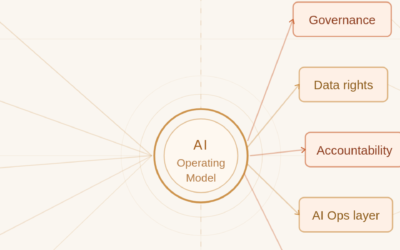
Most telco AI programmes do not stall because the technology fails. They stall because the operating model was never designed to absorb what the models produce. This article breaks down what the CTO needs to own, and the three operating model gaps that will block deployment regardless of how good the models are.

Why AI Use Cases Fail Without an Enterprise AI Operating Model.
Most AI programmes deliver isolated efficiency gains but fail to improve customer experience. The missing link is an enterprise AI operating model that connects internal activity chains to external outcomes.

Does AI Adoption Require Restructuring Your Organization?
AI adoption often does require restructuring, but not in the way most leaders think. The real shift is not org chart theatre. It is workflow redesign, clearer decision rights, stronger governance, and roles built for human and AI collaboration.