
Leadership continuity, by design
Leadership & Succession Planning Consulting
Most organizations run leadership development and succession planning as two separate exercises: one builds capability, the other names replacements, and neither knows what the other decided. Versatile Consulting designs them as a single piece of work — the roles carrying the most exposure set the development agenda, so the people you are developing today are the people ready to hold those roles tomorrow.
When Leadership Continuity Becomes a Business Risk
Leadership gaps rarely appear overnight. They surface when a critical role opens and the organization discovers that no one inside is ready to fill it — not because the talent was absent, but because development and succession were never connected.
Key person risk is the exposure an organization carries when the knowledge, relationships or decision authority held by an individual has no prepared successor inside the business.
Signs Your Organization Is Exposed
- A critical role has no identified second, and the conversation only starts once a resignation lands.
- Successors are named on paper but have never held decision authority, managed a P&L or led through a difficult quarter.
- Promotions happen by seniority or availability rather than by readiness, and the new leader is left to work it out alone.
- When a senior leader leaves, client relationships and institutional knowledge leave with them.
- Leadership development runs as a calendar of workshops with no connection to which roles actually need cover.
Each of these is a symptom of the same gap. The development work and the succession work both exist; they just do not know about each other.
Leadership Development Consulting
We design leadership development programmes for organizations that need their senior people to grow into roles the business will actually need — not into a generic competency profile. Every programme starts from the roles at risk and works backwards to the capabilities that close the gap.
The Versatile Leadership Framework
The Versatile Leadership Framework is Versatile Consulting’s model for developing leaders who can adapt their approach to the demands of a specific role, rather than applying a single leadership style across every situation.
How the Programme Works
The programme runs as an intensive opening block followed by six months of applied group work, closing with a consolidation workshop. Development happens against real decisions the participants are already facing, not case studies.
Because the programme is built around the roles the organization needs covered, the people who complete it are also the people who appear in the succession plan. Development and continuity stop being two budgets.
Three Approaches to Leadership and Succession Planning
Most organizations end up with one of three approaches, usually by default rather than by decision. Each solves a different problem, and each has a cost.
| Criterion | One-off leadership training | Standalone succession planning | Development with an embedded pipeline |
|---|---|---|---|
| What it produces | A cohort of managers who share a training experience. | A document naming successors for senior roles. | Named successors actively closing a defined readiness gap. |
| Where it starts | A competency model or a catalogue of courses. | The organization chart and its current incumbents. | The roles the business would take longest to recover from losing. |
| How readiness is evidenced | Attendance and completion. | A rating agreed in review, usually untested. | Decisions the candidate has held, reviewed against the next role. |
| When a critical role opens unexpectedly | A suitable candidate may exist; there is no way to know in advance. | A successor is named, but the distance between named and ready is unknown. | The gap is known, and how far it has closed is on record. |
| What it asks of the organization | A short, contained time commitment from participants. | An annual review cycle and honest calibration between senior leaders. | Sustained senior involvement over months, and managers willing to hand real decisions to their successors. |
| Best suited to | Building a common leadership language across a management layer. | Meeting a board or governance requirement for a documented plan. | Organizations where a small number of roles carry exposure the business would take months to recover from. |
The third approach is not a better version of the other two. It costs more attention from the people who have least of it, and it only pays off where the exposure is concentrated enough to justify that.
CEO and Executive Succession Planning
Succession planning fails when it produces a document instead of a decision. We work with boards and executive teams to establish who is ready for which corporate leadership role, what would make them ready, and how long that will take.
Succession planning is the process of establishing, for each business-critical leadership role, who could take it on, what readiness they are missing, and how that gap will be closed before the role opens.
Identifying Successors for Critical Roles
Readiness is not the same as performance. A strong operator in their current role may be years away from the next one, while a less visible candidate may already hold most of what the role demands. We assess candidates against the specific requirements of the role they are being considered for — a distinction that tools such as the nine-box grid make visible but do not resolve.
Where succession already sits inside a broader talent management and succession planning process, we work with what exists rather than replacing it.
Planning the Transition
Naming a successor is the start of the work, not the end of it. We plan the handover itself: what the incoming leader needs to hold before the role changes hands, what the outgoing leader needs to transfer, and how the organization is told.
How We Work
The sequence below is the default shape of an engagement. How long each phase takes depends on how much of the picture already exists internally — some organizations arrive with a readiness view that needs testing, others with nothing written down.
Readiness Review
We establish which roles carry the most exposure, who the internal candidates are, and what separates each of them from the role in question. The output is a shared view of readiness the executive team can act on — not a talent rating exercise.
What you get:
- A ranked view of business-critical roles, with what the organization would lose and how long it would take to recover.
- A readiness profile for each internal candidate, assessed against the requirements of the role they are being considered for.
- A written gap statement per candidate: what is missing, and a realistic estimate of how long it takes to close.
Applied Development
The readiness gaps identified in Phase 1 become the working agenda. Candidates develop against decisions they are already facing in the business, supported by group work over six months and reviewed against the requirements of the role they are being prepared for.
What you get:
- An opening intensive of two to three days that sets the development agenda for each participant.
- Six months of facilitated group work, built around live decisions rather than case studies.
- A closing workshop and a re-assessment showing how far each readiness gap has moved.
Transition and Handover
We plan the handover and the review cadence that keeps the plan current: what transfers before the role changes hands, how progress is re-examined, and who owns the plan once we are no longer in the room.
What you get:
- A handover plan for each role in scope: what transfers, in what order, and by when.
- A sequence for telling the organization, agreed before anything is announced.
- A named internal owner and a review rhythm for keeping the plan current after we leave.
Engagements are scoped around a defined set of roles rather than a fixed programme length.
This is an example of our work:
Insurance provider — building a shared strategic agenda with the leadership team
Industry: Insurance (Spain and Portugal) · Impact: Leadership team of 8
The challenge. The leadership team needed to define its strategic agenda for the year ahead — improving both customer and employee experience — while accounting for uncertainty and scenarios that had not yet emerged.
What we did. Working with the company’s HR business partners, we designed and facilitated a workshop using the Lego® Serious Play® method. The team built a shared strategy and vision, worked through how different future scenarios could unfold, and agreed the guiding principles that would hold across them.
The results. A shared strategy and vision owned by the leadership team itself. The team recorded a video explaining it for the internal newsletter, and the model they built was displayed in the corporate building — keeping the agenda visible to the wider organization.
Team: 4 external.
About Versatile Consulting
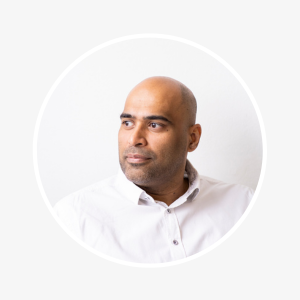
Saket Bivalkar
Managing Partner. Meet the Versatile Consulting team.
Saket Bivalkar is the founder and Managing Partner of Versatile Consulting. He has spent 15 years working with executive teams on leadership continuity: who is ready to lead what, and what the organization loses when that changes without warning.
He is the author of the Versatile Leadership Framework, and has run leadership and succession engagements for organizations in [telecommunications, financial services and industrial manufacturing] across Europe, the United States and the Middle East — including a €2bn industrial group where four of the top ten roles had no identified successor.
Leadership work is not delegated at Versatile Consulting. Saket designs and runs these engagements himself, which is why no more than three run at any one time.
Frequently asked questions
What is the difference between leadership development and succession planning?
Leadership development builds capability in the people an organization already has. Succession planning establishes who would take on a business-critical role if it opened, and what they are missing. The two answer different questions, which is why they are often run separately — but the readiness gaps a succession plan identifies are the most useful agenda a development programme can have.
When should a company start planning for CEO succession?
Before there is a reason to. Succession work started in response to a departure produces a hiring process, not a plan — the candidates are assessed against the vacancy rather than developed towards it. Boards that revisit the question annually, when nothing is happening, are the ones with real options when something does.
Who should be included in a succession plan besides the executive team?
Any role where a single person holds knowledge, client relationships or decision authority that would take months to rebuild. That is often a technical lead, a country manager or a long-tenured operator well below board level. Key person risk is not a function of seniority — it is a function of how long the organization would take to recover from the gap.
How do you identify successors without unsettling the current leadership team?
By separating readiness from performance, and by being explicit that identifying a successor is not a judgement on the incumbent. Most discomfort comes from ambiguity about what the exercise is for. Where the framing is clear — that the organization is closing exposure, not planning replacements — senior leaders tend to participate rather than resist.
What happens if there is no obvious internal candidate?
Then the plan has done its job: it has surfaced a gap early enough to act on. The options are to develop someone further out than expected, to split the role’s most exposed responsibilities across more than one person while a successor develops, or to recruit with a lead time you would not otherwise have had. Discovering this at the point of departure removes all three.
How long does it take before a succession plan is worth anything?
A first view of exposure and readiness takes weeks. Closing a readiness gap takes months, and how many depends on the distance involved — a candidate who has never held a P&L is not six weeks away from being ready for one. The plan becomes useful at the first point, and reliable at the second.
Start With the Roles That Matter Most
The first conversation is not a pitch. It is a working session about which roles in your organization carry real exposure, who is currently in line for them, and whether that is a plan or an assumption. If there is a fit, we will say so. If the exposure is contained enough that you do not need us, we will say that too.